Domain cmnb.de kaufen?
Wir ziehen mit dem Projekt
cmnb.de um.
Sind Sie am Kauf der Domain
cmnb.de interessiert?
domain@kv-gmbh.de · 0541-91531010
Domain cmnb.de kaufen?
Travelling or traveling?
Both "travelling" and "traveling" are correct spellings of the word, but they are used in different regions. "Travelling" is more commonly used in British English, while "traveling" is more commonly used in American English. **
Gucci or Prada?
That is a subjective question and it depends on personal preference. Both Gucci and Prada are luxury fashion brands known for their high-quality products and unique designs. It ultimately comes down to individual style and taste. **

Ähnliche Suchbegriffe für Or
Top-Angebote
Produkte zum Begriff Or:

-
Do or does?
The choice between "do" and "does" depends on the subject of the sentence. "Do" is used with plural subjects and "does" is used with singular subjects. For example, "They do their homework" and "She does her homework." **
-
Anyway or anyways?
Both "anyway" and "anyways" are commonly used in spoken English to mean the same thing. However, "anyway" is more widely accepted and considered to be the standard form. "Anyways" is often considered to be more informal or colloquial. **
-
Go or goes?
The correct form would depend on the subject of the sentence. "Go" is used with the pronouns "I," "you," "we," and "they," while "goes" is used with the pronouns "he," "she," and "it." For example, "I go to the store" and "She goes to the store." **
-
Doesn't or don't?
The correct form to use depends on the subject of the sentence. "Doesn't" is used with singular subjects, while "don't" is used with plural subjects. For example, "He doesn't like coffee" (singular subject) and "They don't like coffee" (plural subject). **

Cake or fake?
It depends on the context. If you are asking about a choice between eating cake or something that is not real, then cake would be the preferred option. However, if you are asking about the authenticity of something, then fake would imply that it is not genuine or real. **
Will or gonna?
"Will" and "gonna" are both used to express future actions, but there are slight differences in their usage. "Will" is more formal and is used in more formal situations, while "gonna" is a more informal and colloquial way of expressing future actions. **
Top-Angebote
Produkte zum Begriff Or:
-
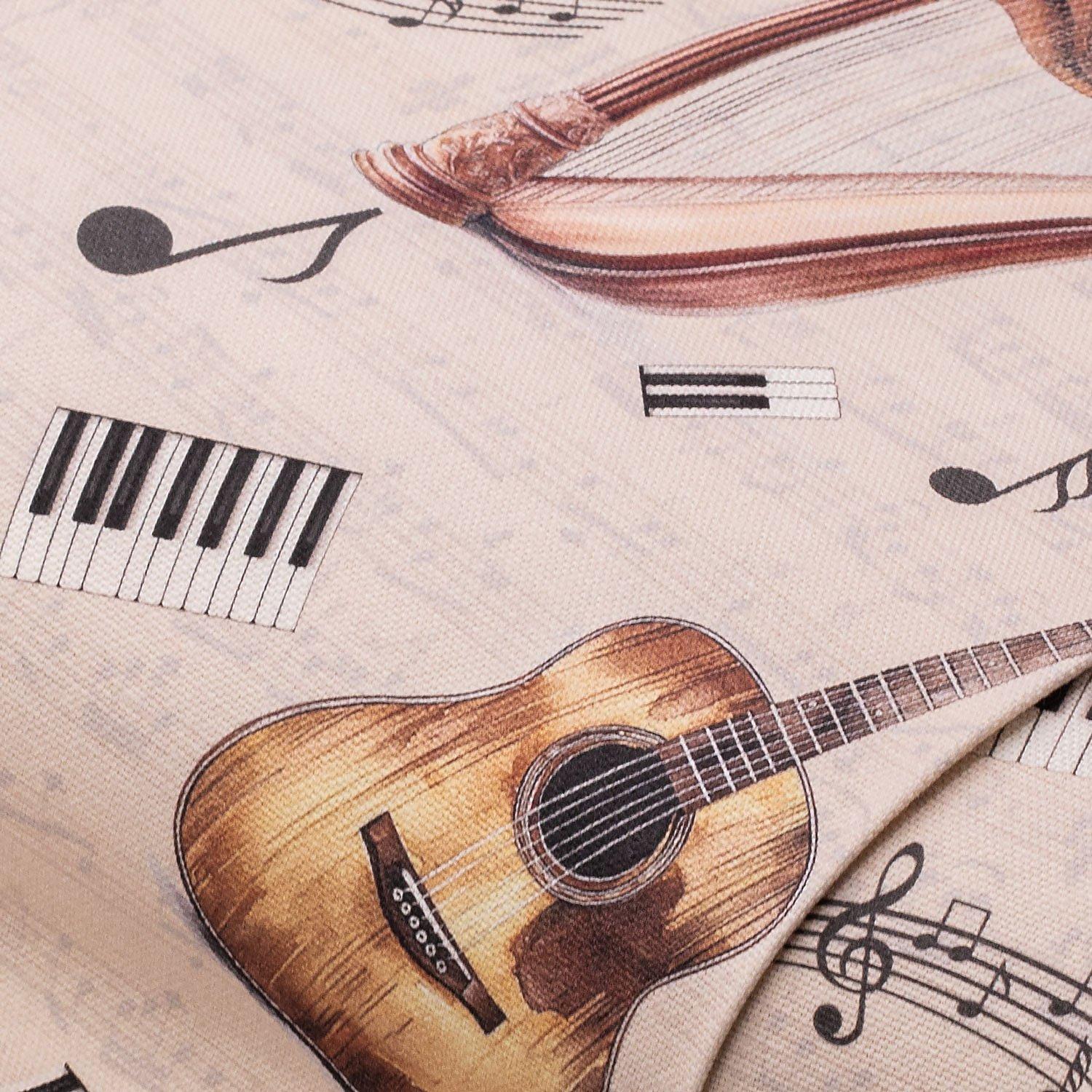
Baumwoll-Canvas Instrumente & Noten „Doreen“, natur-colorExklusiv von buttinette: Baumwoll-Canvas "Instrumente & Noten" aus der Serie "Doreen", Farbe: natur-color, Motivgröße Gitarre: 16 x 7 cm, Breite: 140 cm, Gewicht: ca. 220 g/m². Material: 100 % Baumwolle.weicher, hochwertiger Dekostoffaus reiner Baumwolleelegantes Design mit Instrumenten & Notenfür Deko, Tischwäsche, Taschen uvm.Ein Leben ohne Musik wäre furchtbar eintönig, daher haben wir mit diesem schönen Dekostoff eine Ode an diese wundervolle Kunstform geschaffen. Mit Tischläufern, Tischsets, Überwürfen oder Kissen aus diesem zauberhaften Canvas erstrahlen Ihre vier Wände in neuem Glanz – klingt das nicht wie Musik in Ihren Ohren? Der hochwertige Baumwoll-Dekostoff ist mit einem lebendigen Muster aus Noten & Instrumenten bedruckt. Da der Stoff relativ fest und formstabil ist, kann er auch problemlos zu modischen Taschen vernäht werden. Bestellen Sie am besten gleich und überzeugen Sie sich selbst!13,95 €*Versand: 4,99 €Sichere Weiterleitung zum Anbieter
-
Travelling or traveling?
Both "travelling" and "traveling" are correct spellings of the word, but they are used in different regions. "Travelling" is more commonly used in British English, while "traveling" is more commonly used in American English. **
-
Gucci or Prada?
That is a subjective question and it depends on personal preference. Both Gucci and Prada are luxury fashion brands known for their high-quality products and unique designs. It ultimately comes down to individual style and taste. **
-
Do or does?
The choice between "do" and "does" depends on the subject of the sentence. "Do" is used with plural subjects and "does" is used with singular subjects. For example, "They do their homework" and "She does her homework." **
-
Anyway or anyways?
Both "anyway" and "anyways" are commonly used in spoken English to mean the same thing. However, "anyway" is more widely accepted and considered to be the standard form. "Anyways" is often considered to be more informal or colloquial. **
Ähnliche Suchbegriffe für Or
-
Meier, Christiane: Instrumente, Noten, GesangInstrumente, Noten, Gesang , Differenzierte Materialien zur Entwicklung und Festigung von Grundwissen im Musikunterricht (2. bis 4. Klasse) , Zündkabel & Zündkabelstecker > Elektrik & Zündungen , Erscheinungsjahr: 20230102, Produktform: Kassette, Inhalt/Anzahl: 1, Inhalt/Anzahl: 1, Beilage: E-Bundle, Titel der Reihe: Grundwissen Mathematik##, Autoren: Meier, Christiane, Seitenzahl/Blattzahl: 80, Keyword: 2. bis 4. Klasse; Grundschule; Musik; Themenübergreifend, Fachschema: Musikunterricht / Lehrermaterial, Themenvorschläge, Bildungsmedien Fächer: Musik, Fachkategorie: Schule und Lernen, Bildungszweck: für den Primarbereich, Altersempfehlung / Lesealter: 23, Genaues Alter: GRS, Warengruppe: HC/Schulbücher/Unterrichtsmat./Lehrer, Fachkategorie: Unterrichtsmaterialien, Schulform: GRS, Text Sprache: ger, Sender’s product category: BUNDLE, Verlag: Persen Verlag i.d. AAP, Verlag: Persen Verlag i.d. AAP, Länge: 293, Breite: 206, Höhe: 13, Gewicht: 500, Produktform: Blätter, Genre: Schule und Lernen, Genre: Schule und Lernen, Beinhaltet: B0000064958001 9783403208969-2 B0000064958002 9783403208969-1, Herkunftsland: DEUTSCHLAND (DE), Katalog: deutschsprachige Titel, Katalog: Gesamtkatalog, Katalog: Lagerartikel, Book on Demand, ausgew. Medienartikel, Relevanz: 0002, Tendenz: -1, Schulform: Grundschule, Unterkatalog: AK, Unterkatalog: Bücher, Unterkatalog: Hardcover, Unterkatalog: Lagerartikel, Unterkatalog: Schulbuch, WolkenId: 283725923,99 €*Versand: 0,00 €Sichere Weiterleitung zum Anbieter
-
Go or goes?
The correct form would depend on the subject of the sentence. "Go" is used with the pronouns "I," "you," "we," and "they," while "goes" is used with the pronouns "he," "she," and "it." For example, "I go to the store" and "She goes to the store." **
-
Doesn't or don't?
The correct form to use depends on the subject of the sentence. "Doesn't" is used with singular subjects, while "don't" is used with plural subjects. For example, "He doesn't like coffee" (singular subject) and "They don't like coffee" (plural subject). **
-
Cake or fake?
It depends on the context. If you are asking about a choice between eating cake or something that is not real, then cake would be the preferred option. However, if you are asking about the authenticity of something, then fake would imply that it is not genuine or real. **
-
Will or gonna?
"Will" and "gonna" are both used to express future actions, but there are slight differences in their usage. "Will" is more formal and is used in more formal situations, while "gonna" is a more informal and colloquial way of expressing future actions. **
* Alle Preise verstehen sich inklusive der gesetzlichen Mehrwertsteuer und ggf. zuzüglich Versandkosten. Die Angebotsinformationen basieren auf den Angaben des jeweiligen Shops und werden über automatisierte Prozesse aktualisiert. Eine Aktualisierung in Echtzeit findet nicht statt, so dass es im Einzelfall zu Abweichungen kommen kann. ** Hinweis: Teile dieses Inhalts wurden von KI erstellt.